Certain Parties were not pleased





Certain parties were not pleased
Solo Exhibition
Cazul 101, Bucharest, Romania
2023
Press Release
20 April – 27 May 2023
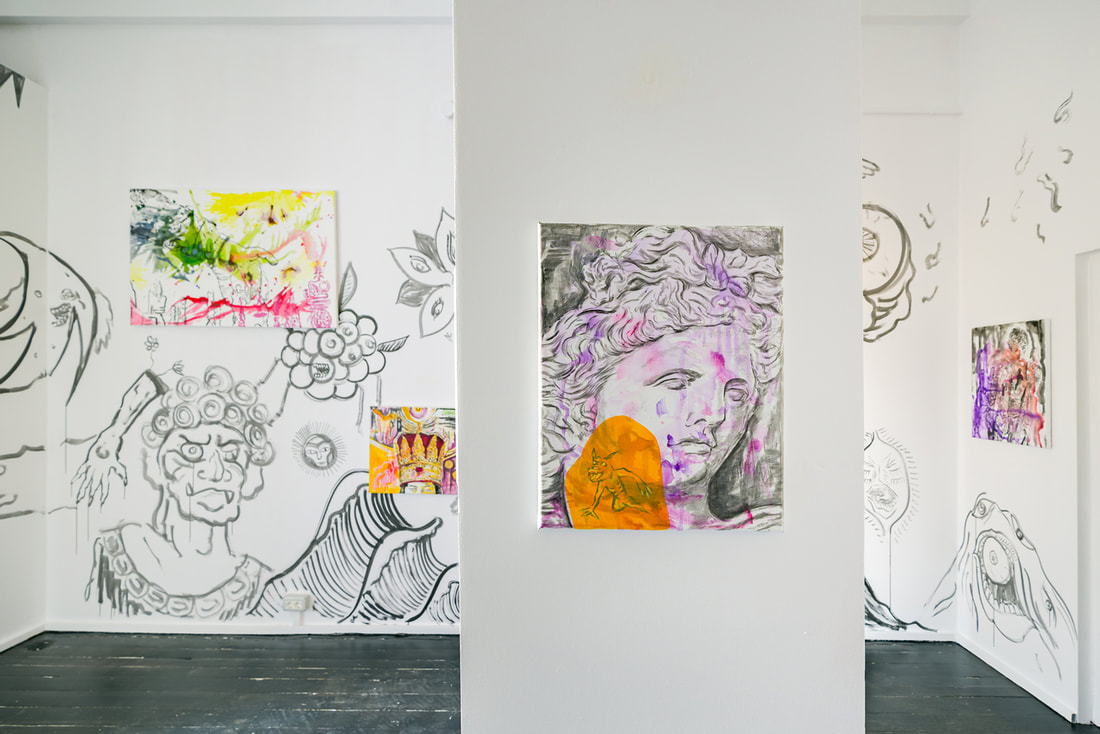
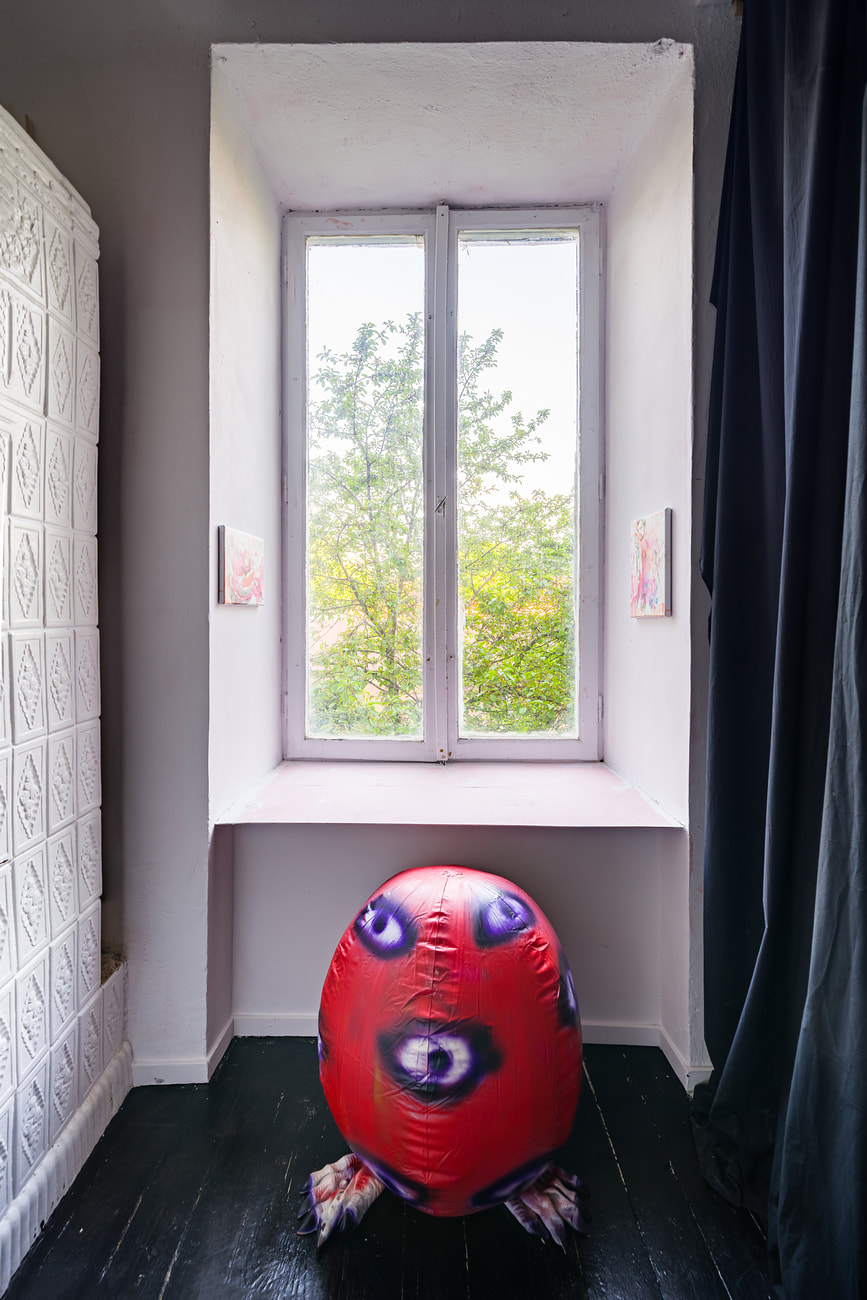
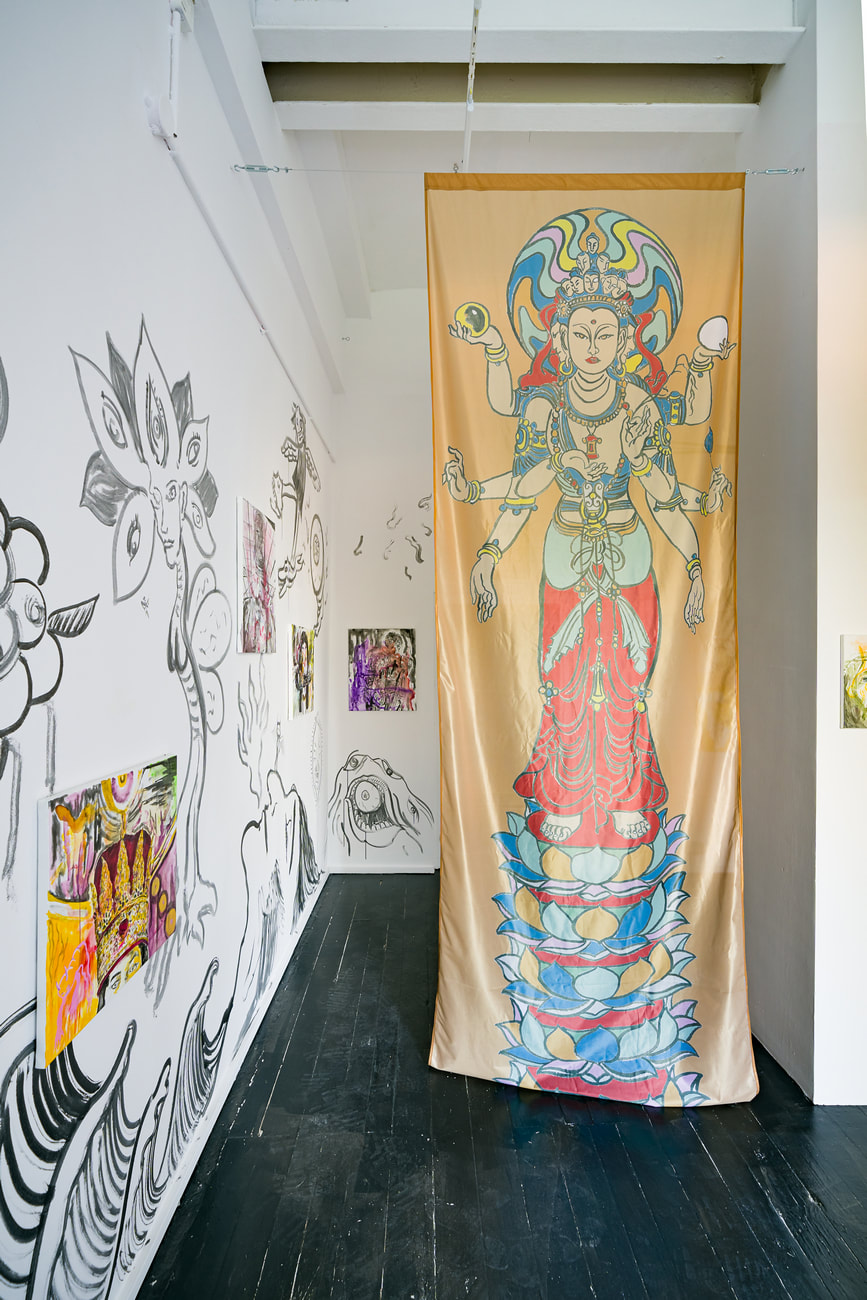
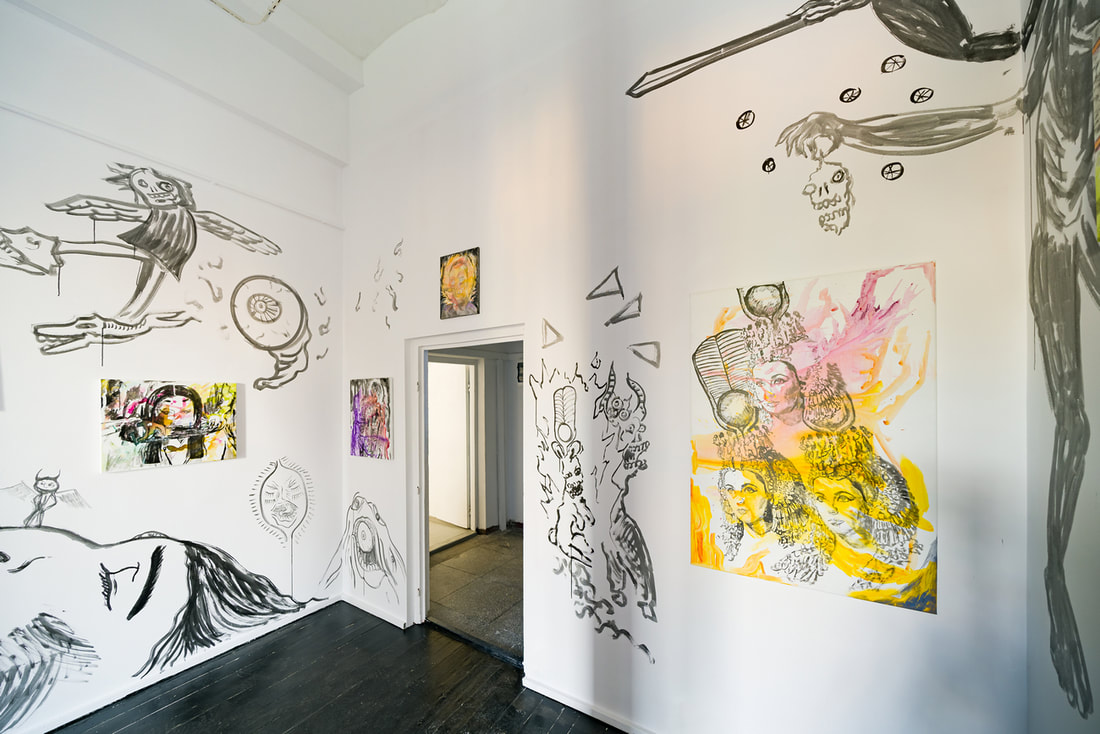
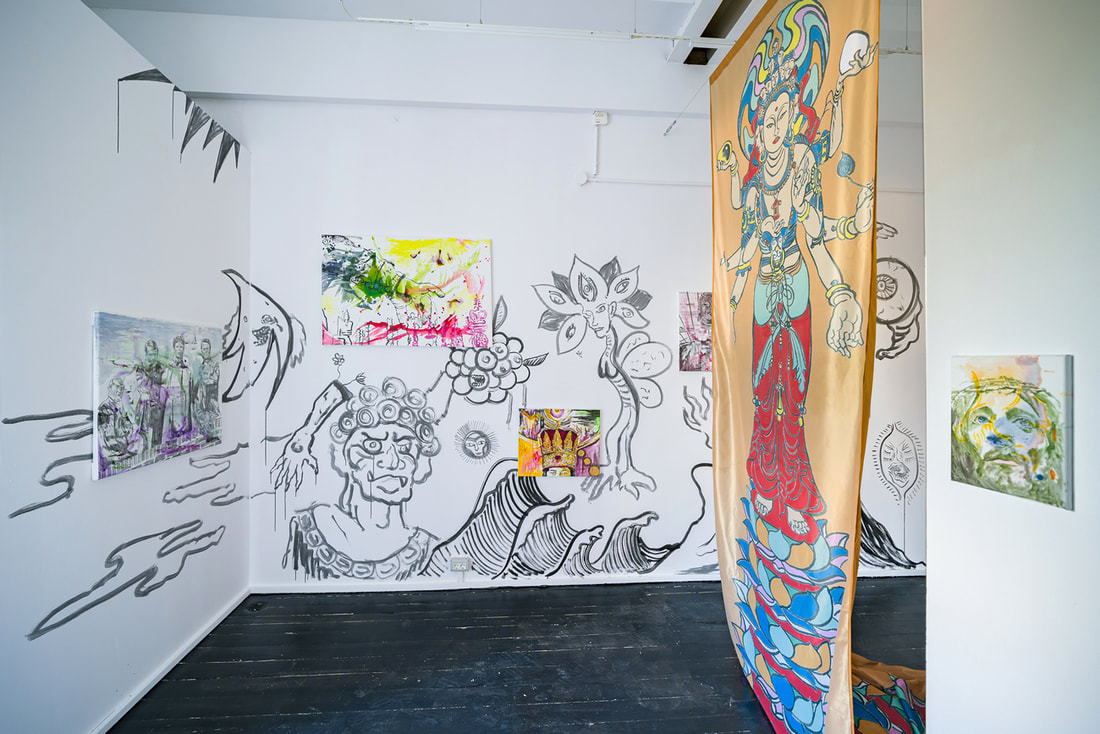
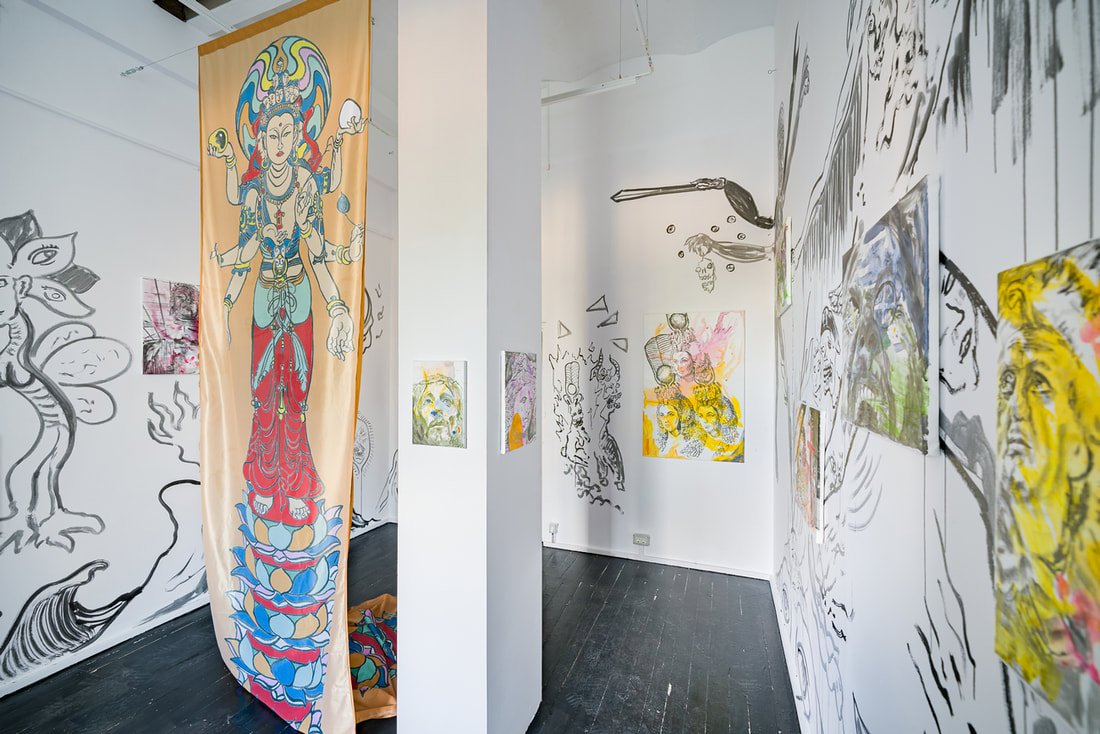
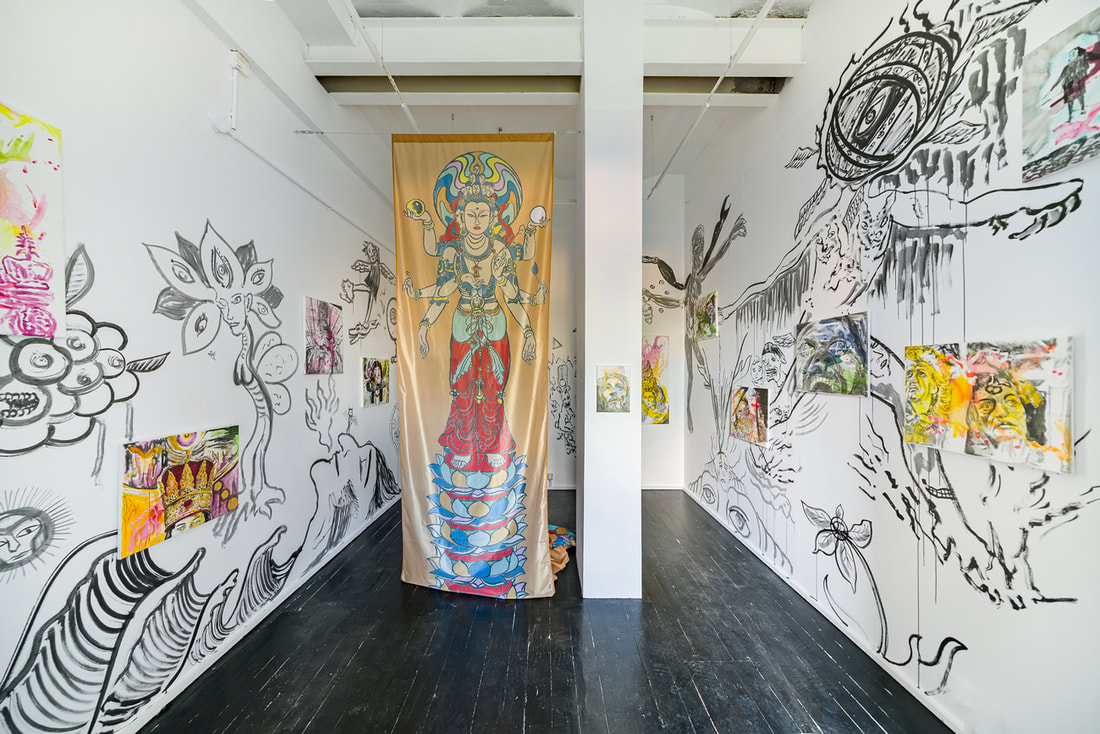
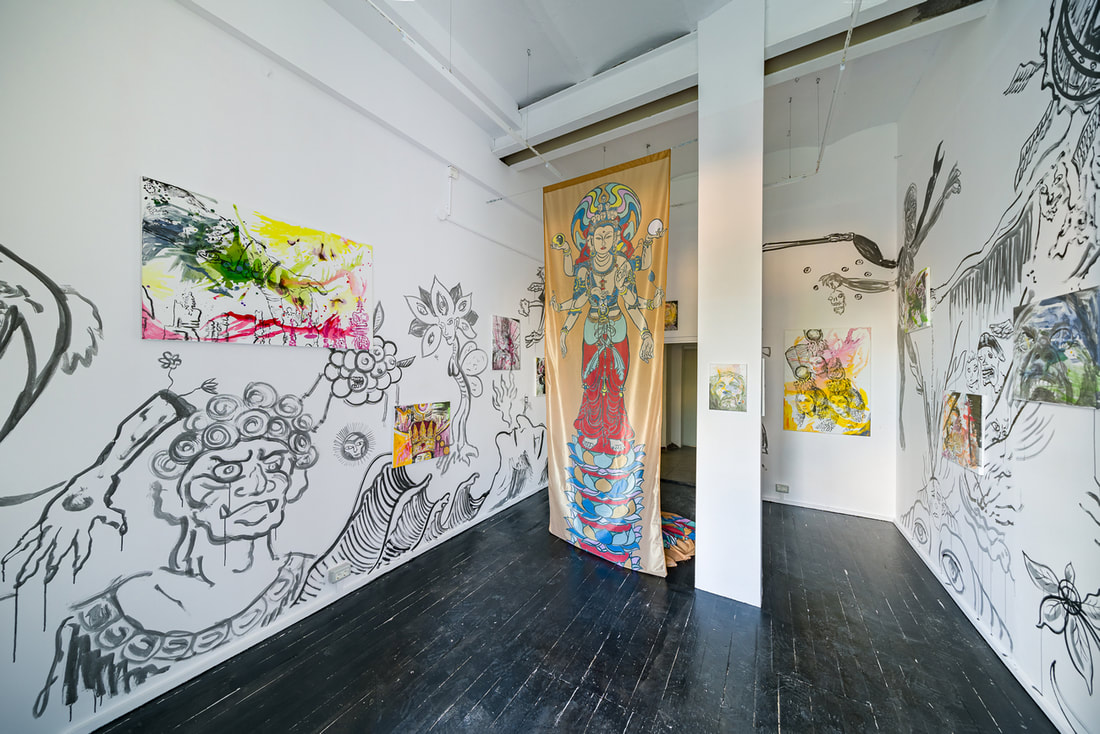
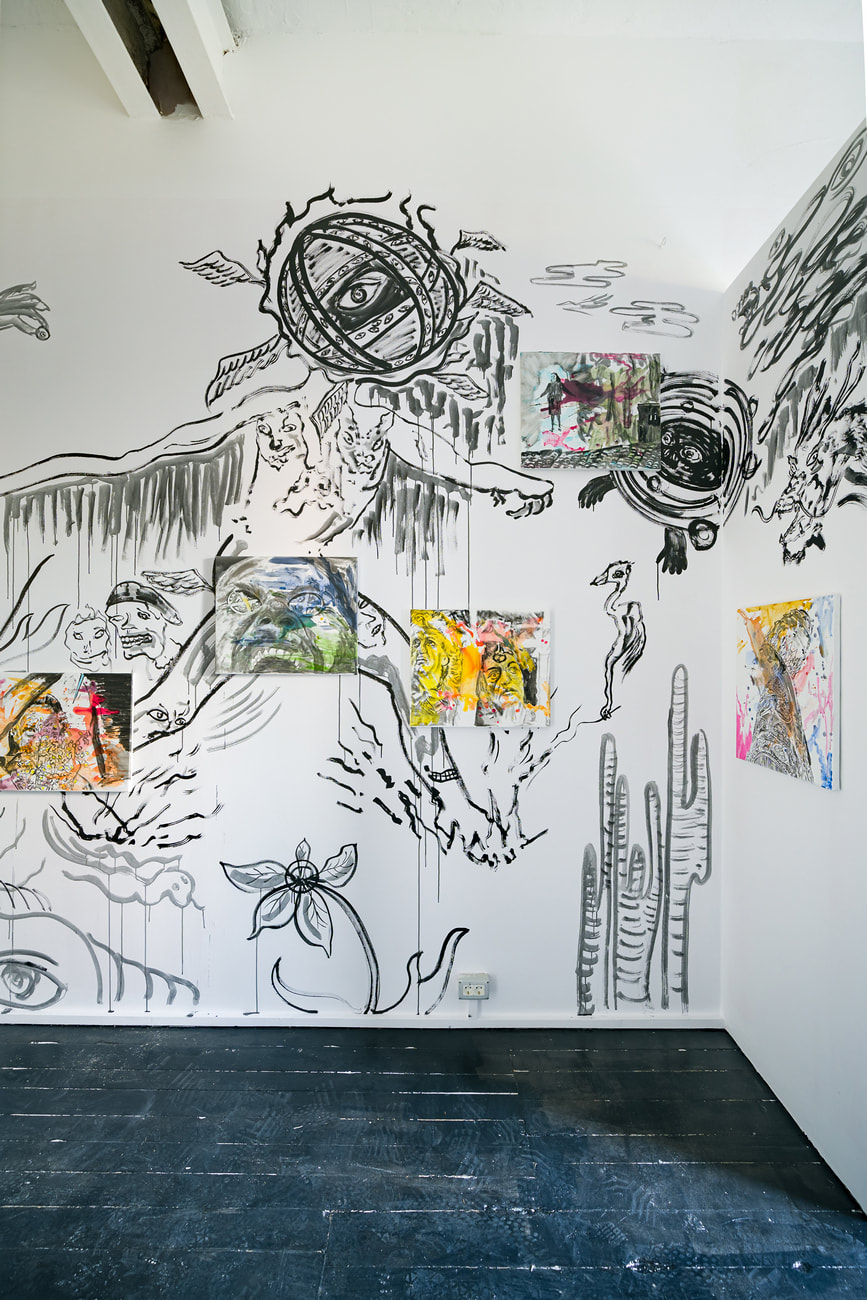
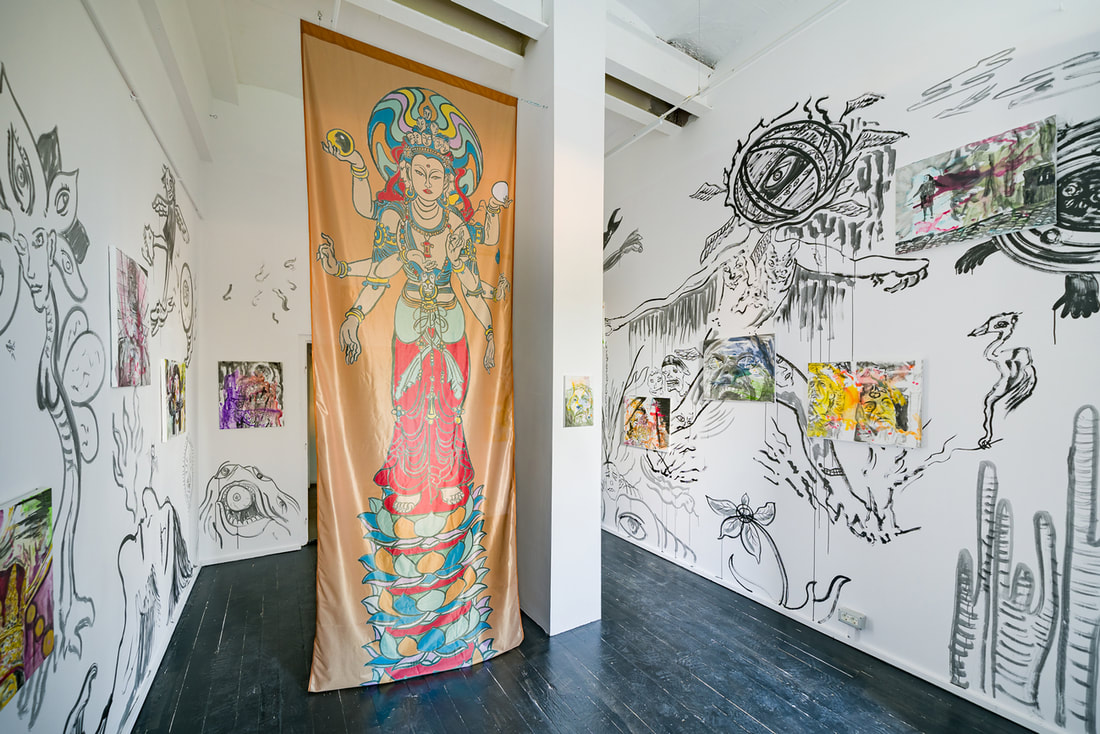
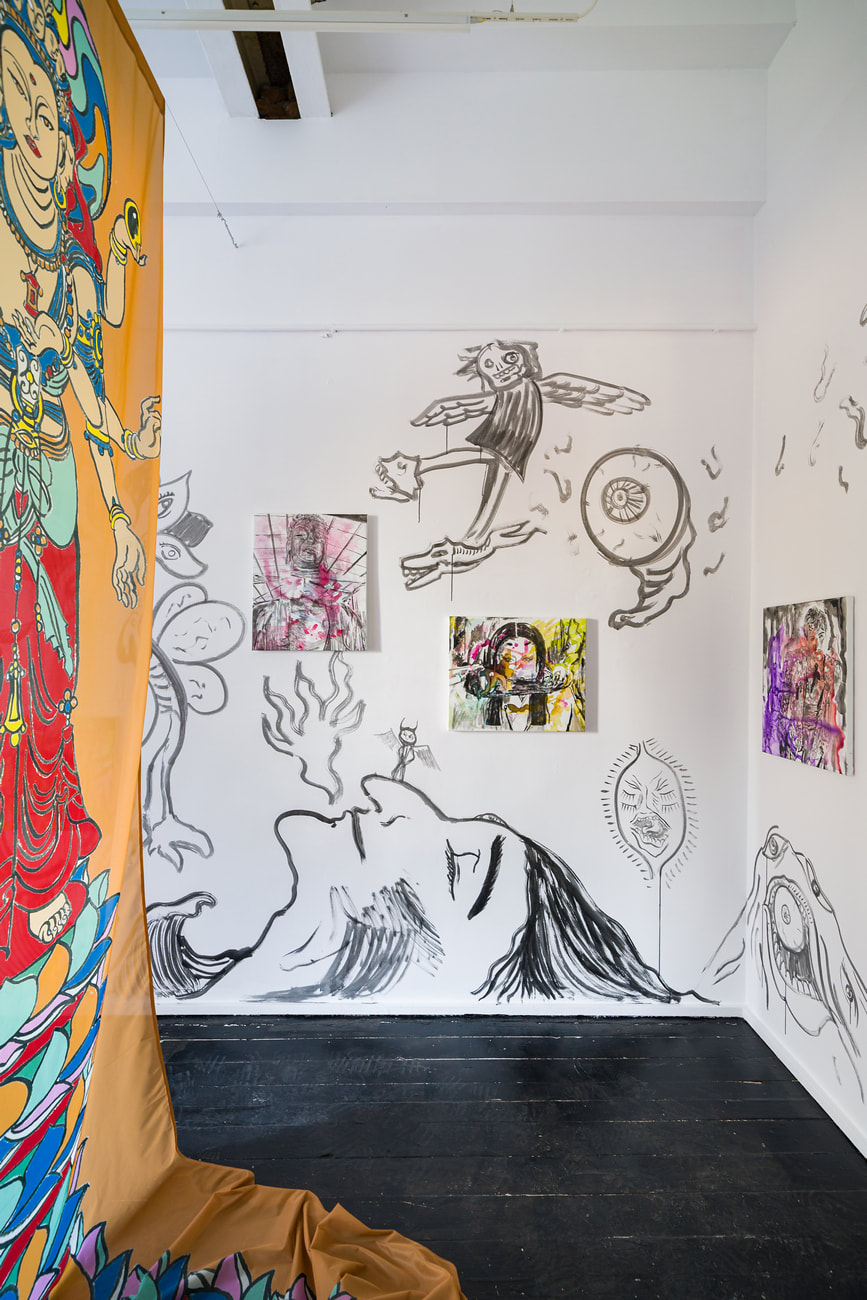
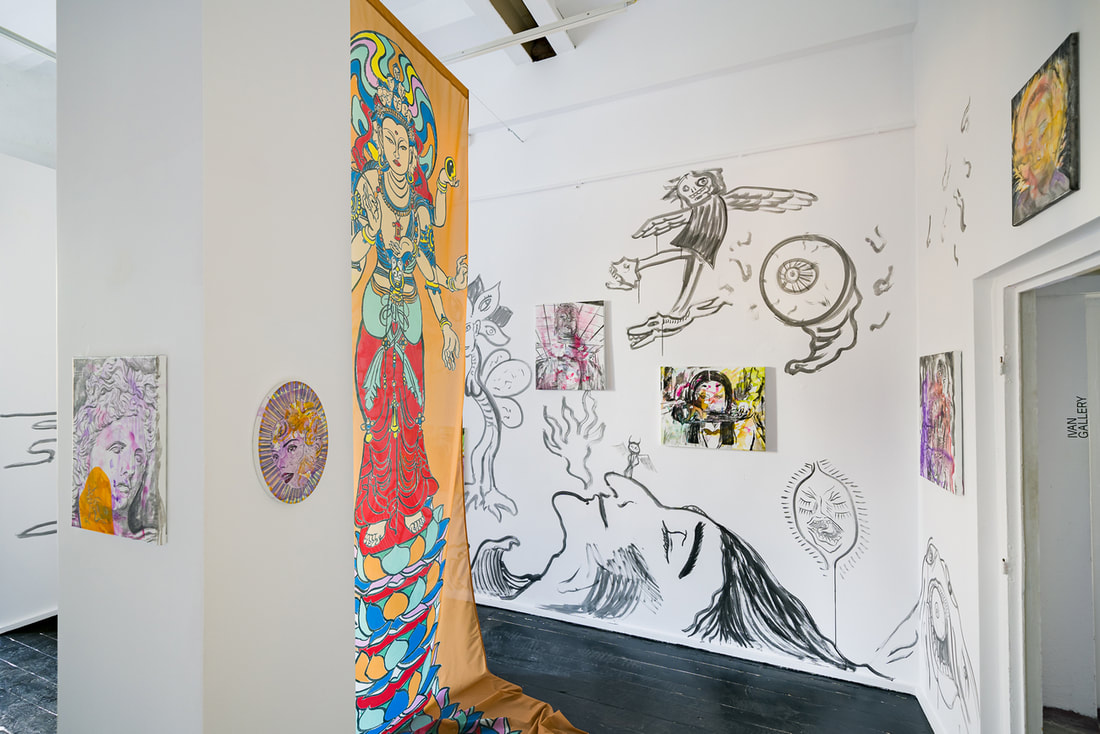
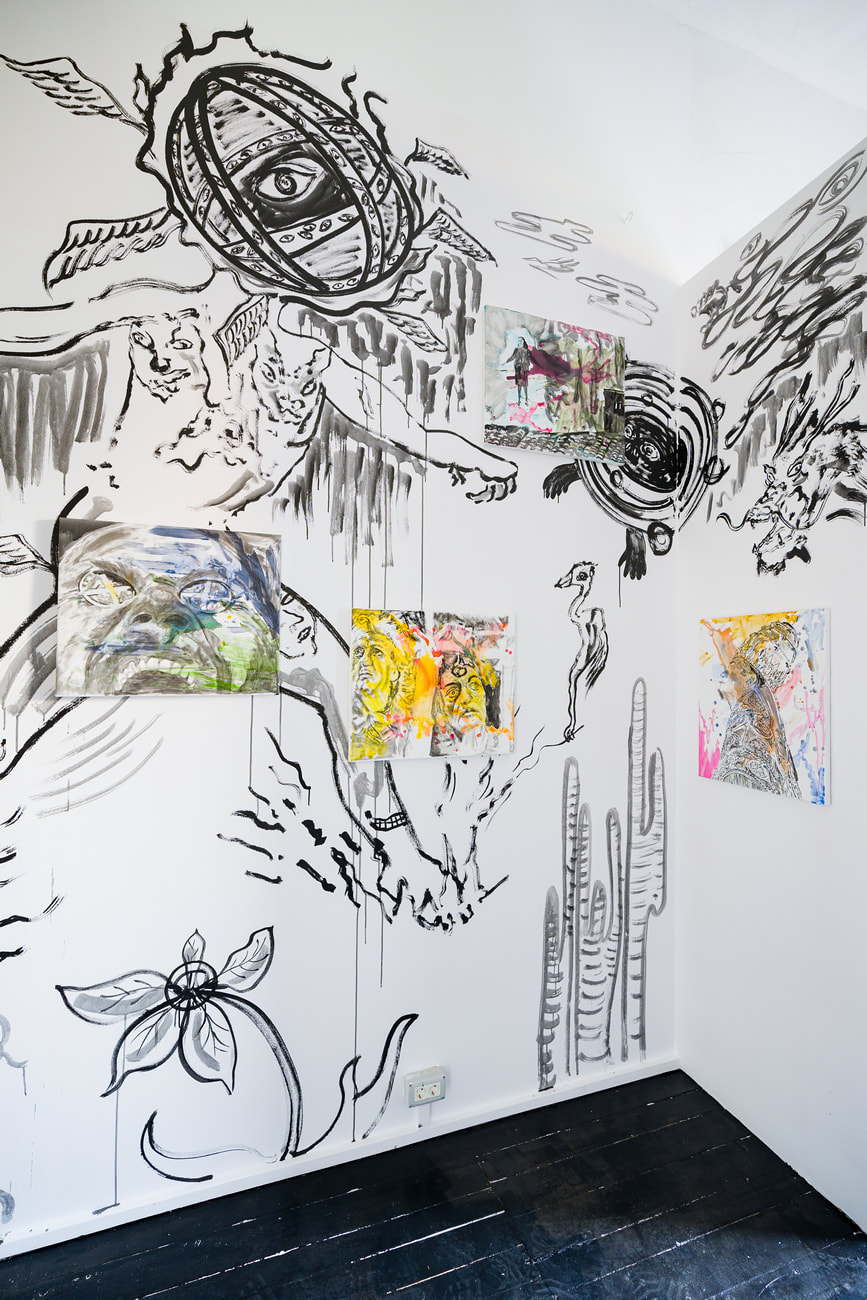
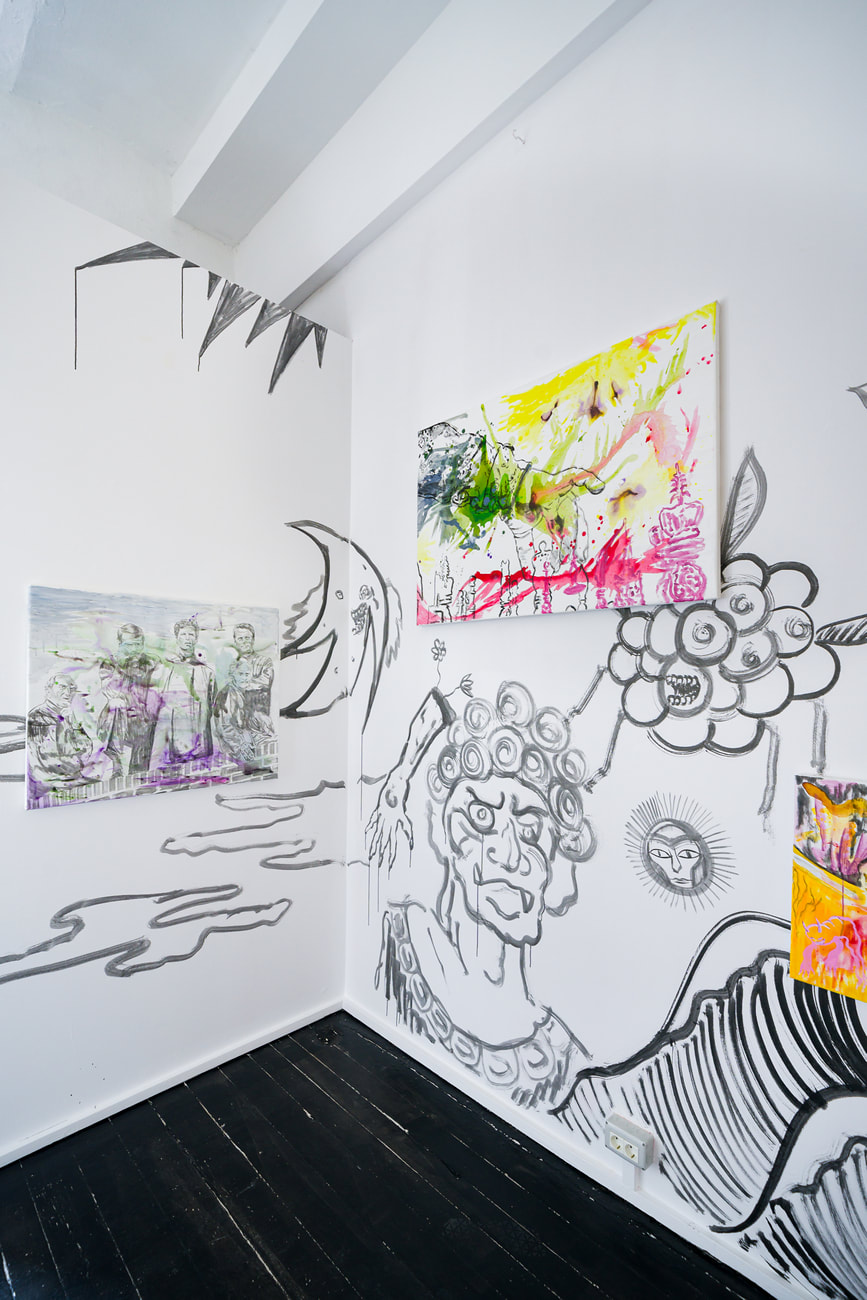
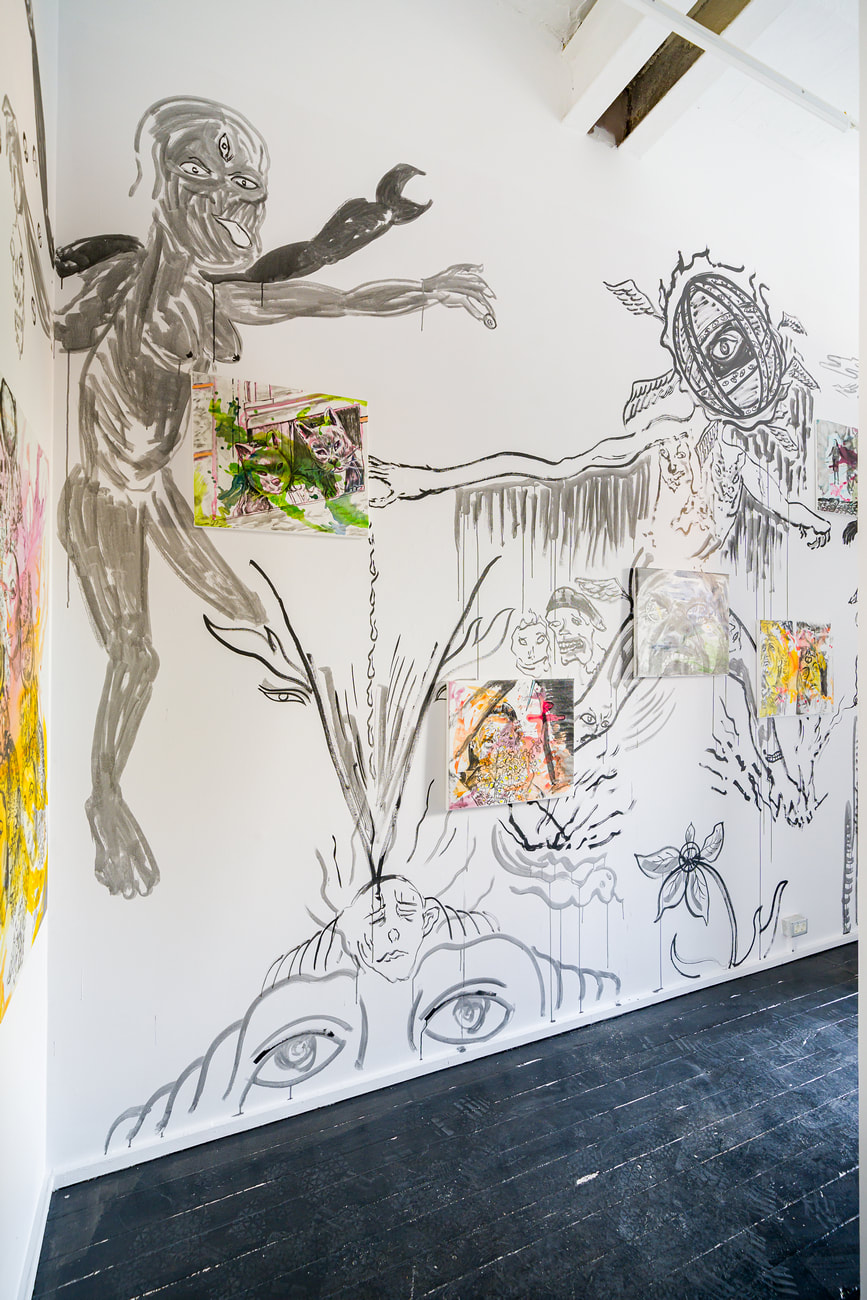
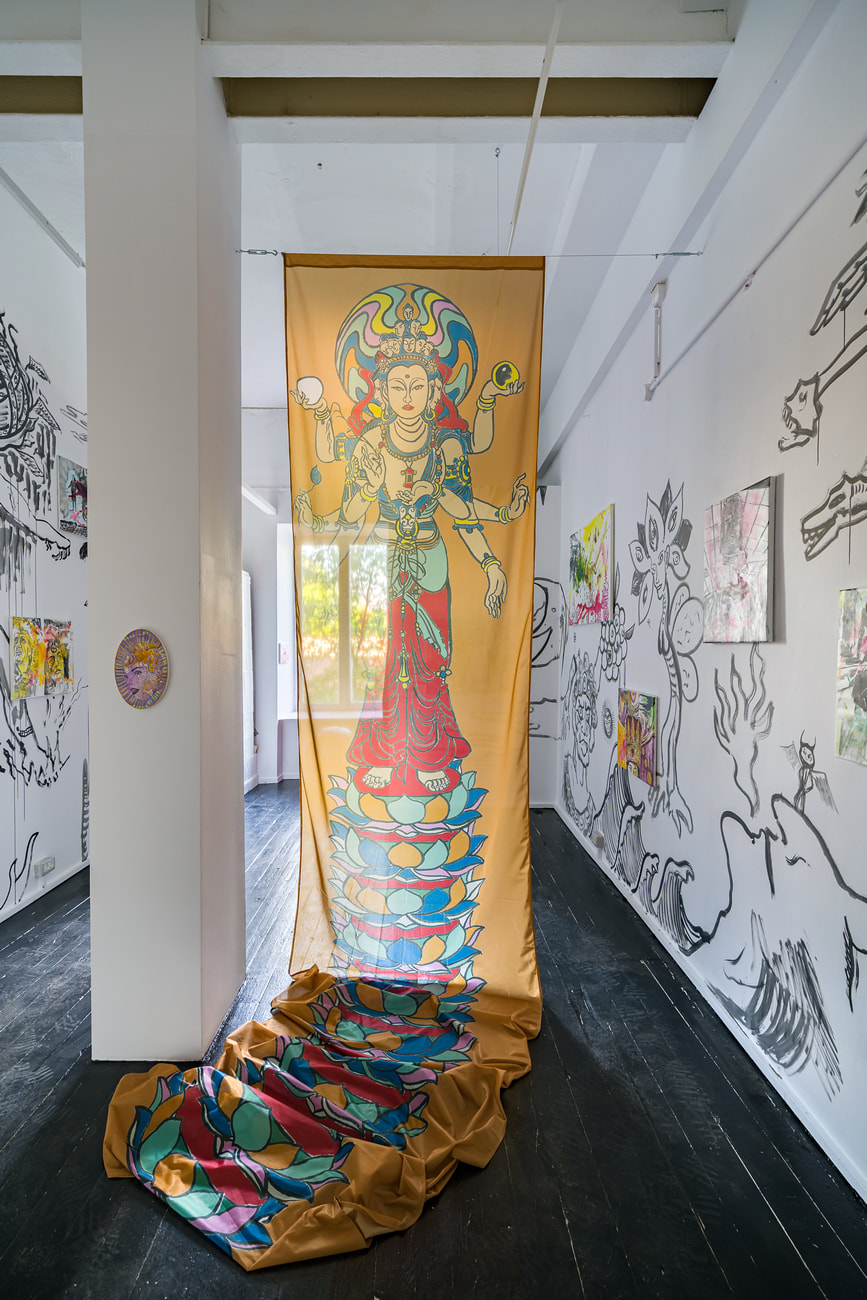
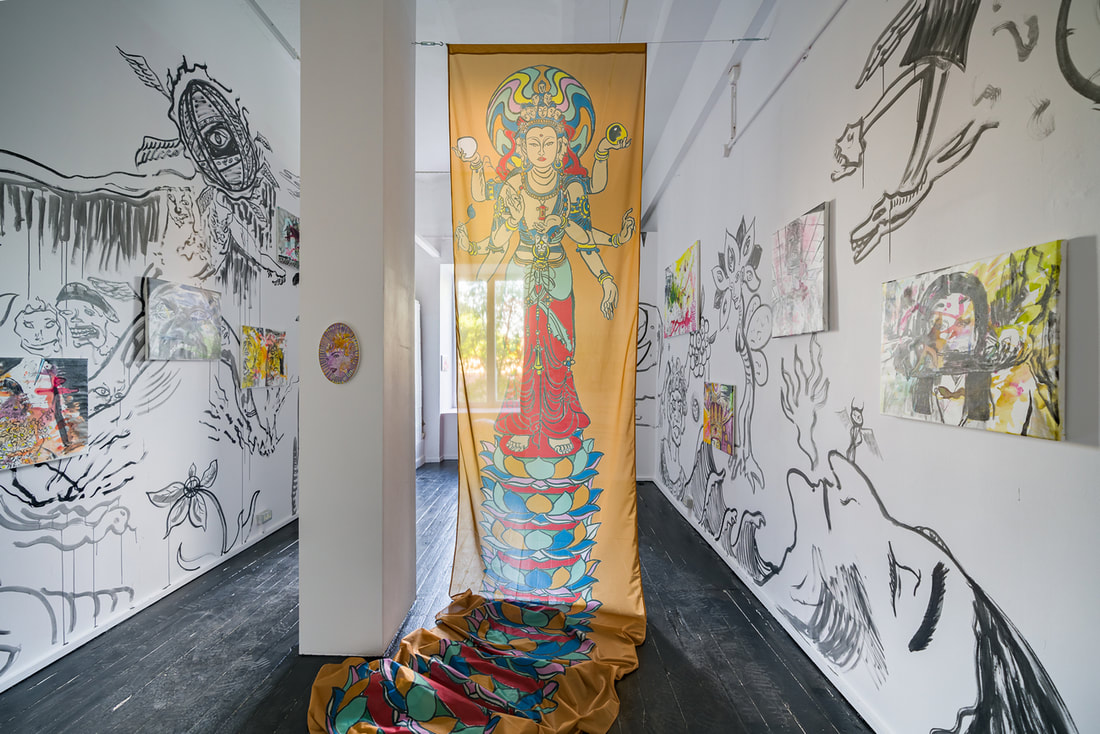
In his first solo exhibition at Cazul 101 Oscar Chan Yik Long presents a series of new paintings in acrylic and Chinese ink on canvas together with some works in other techniques, all enveloped in a site-specific painting installation.
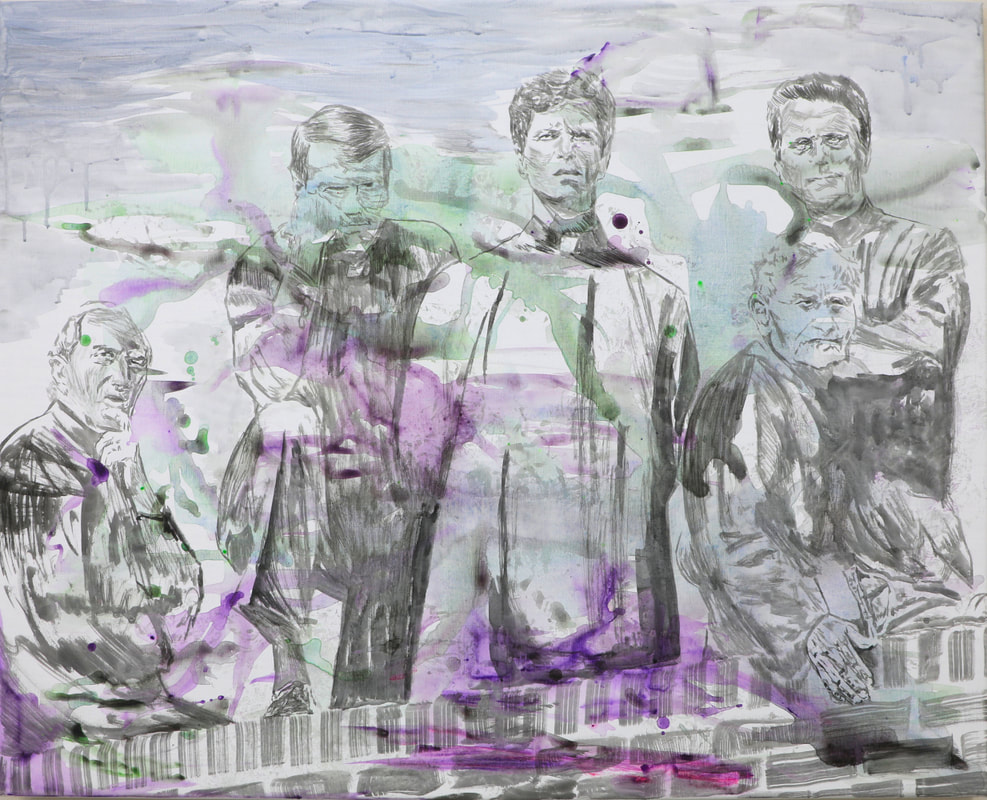
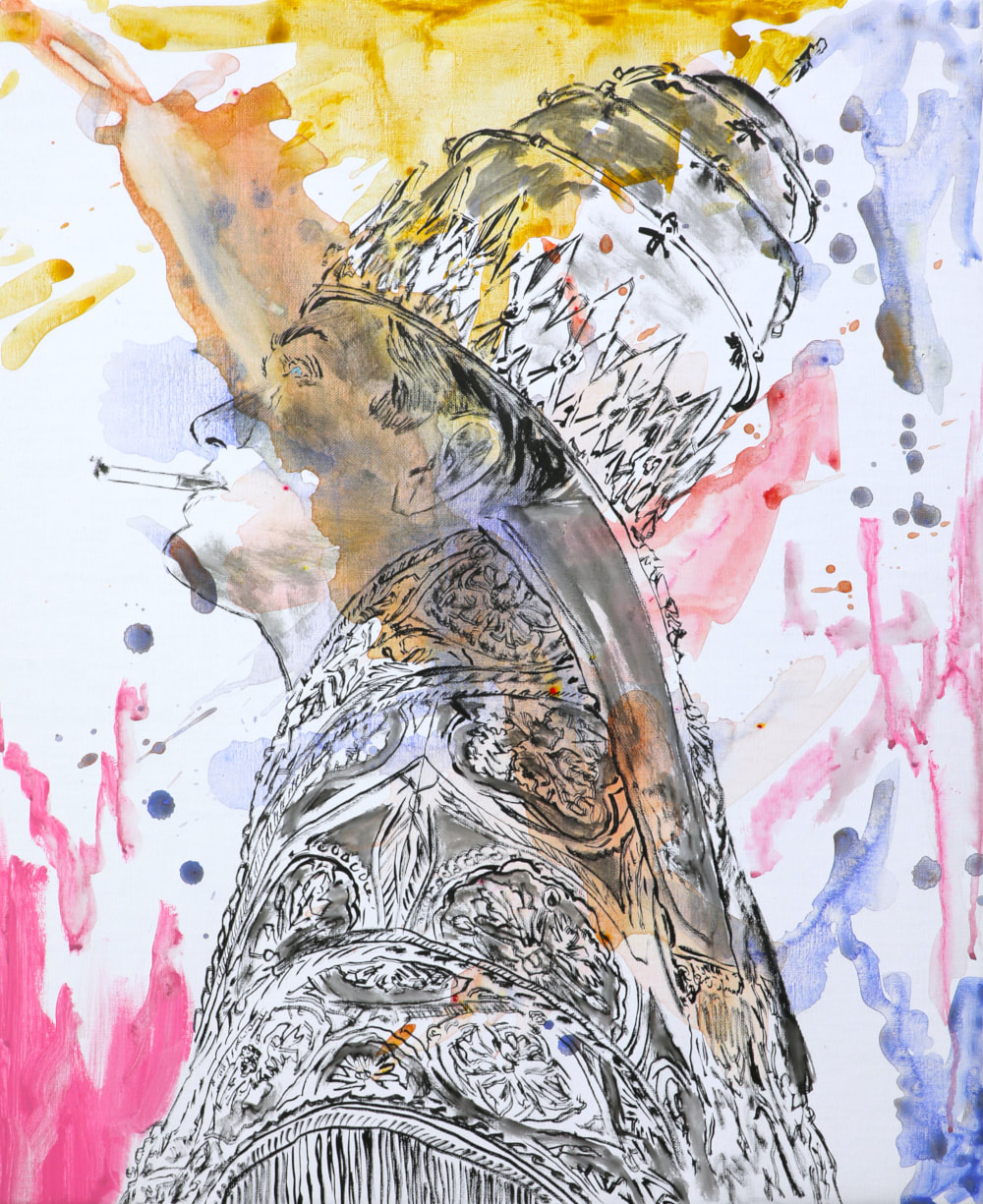
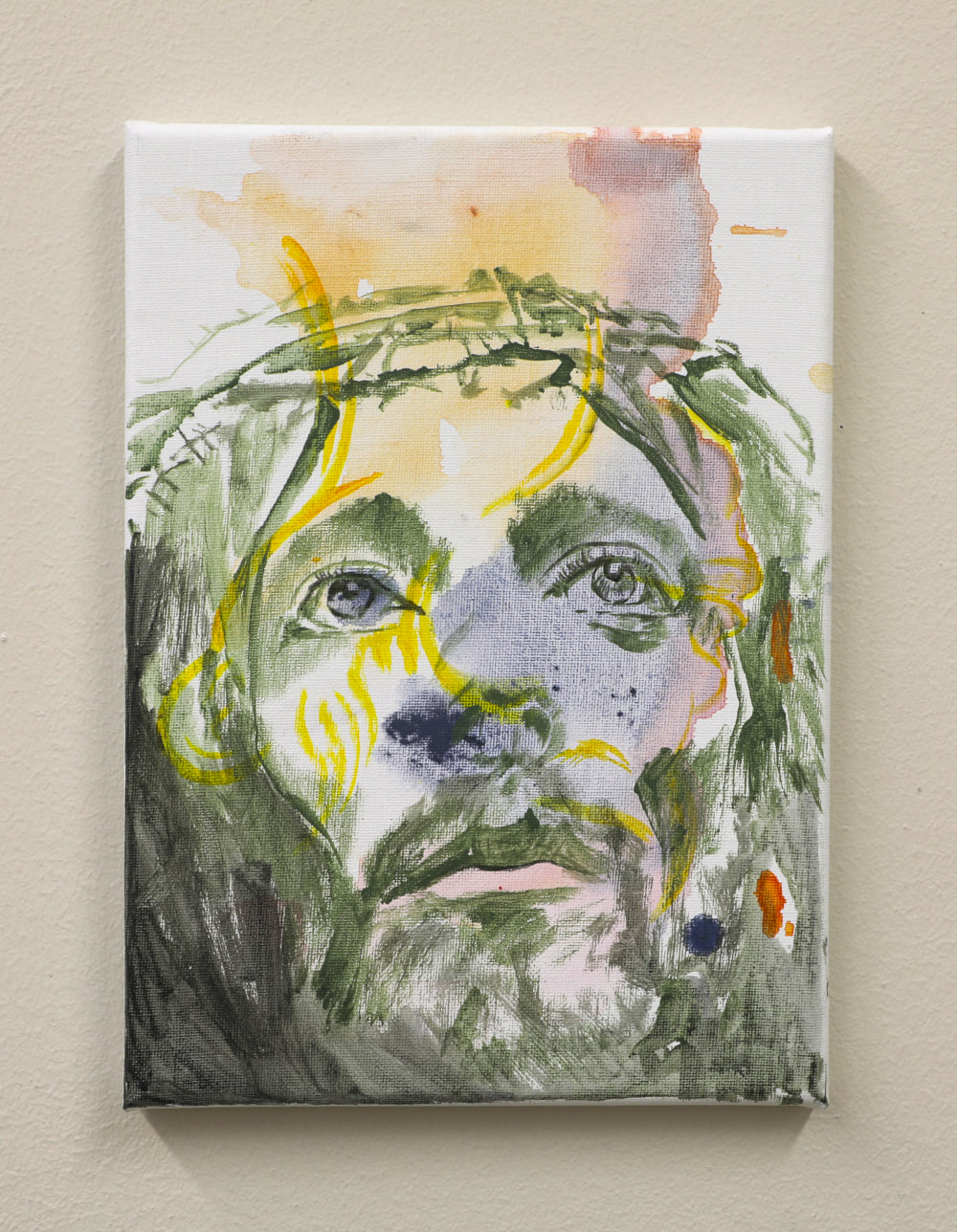
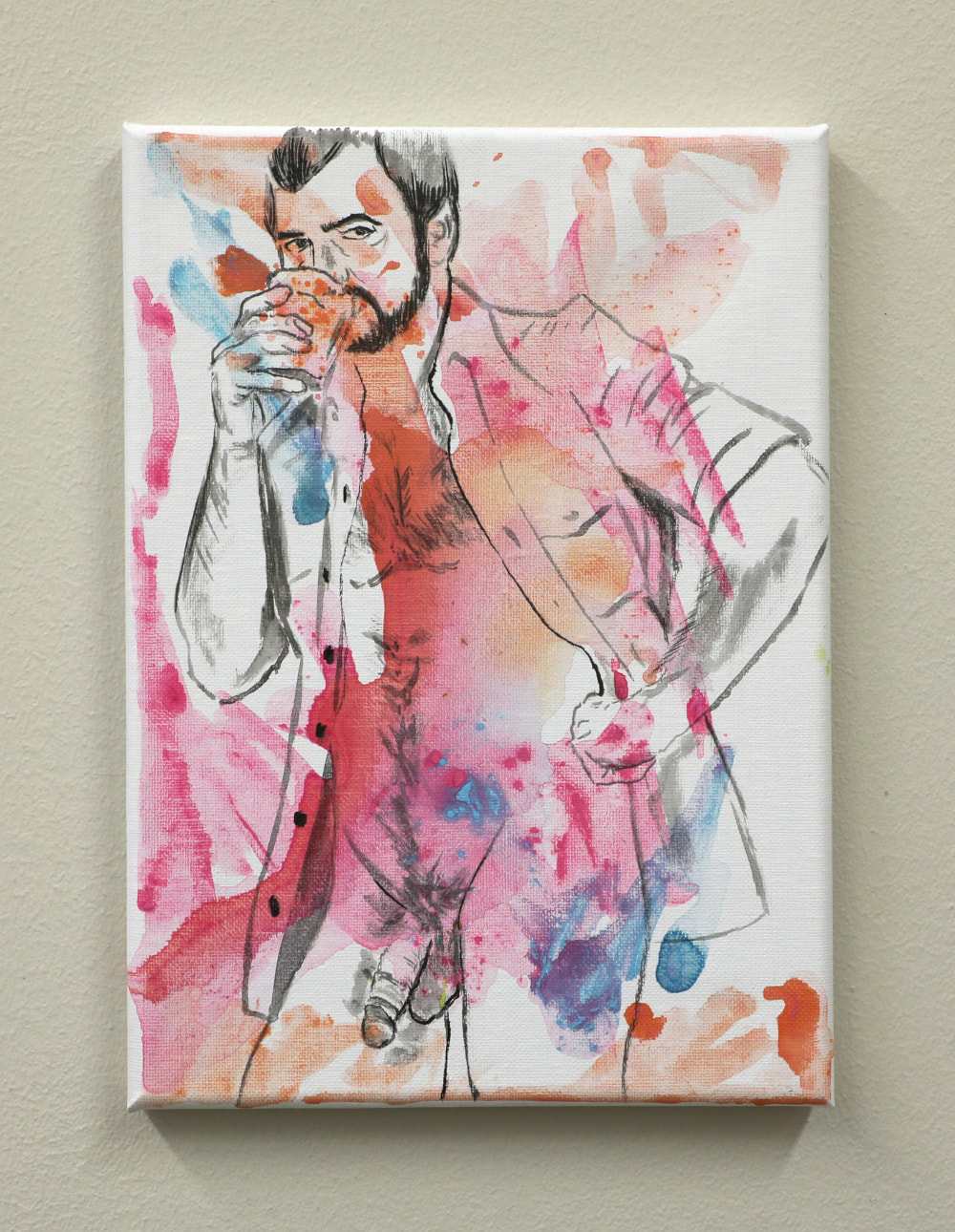
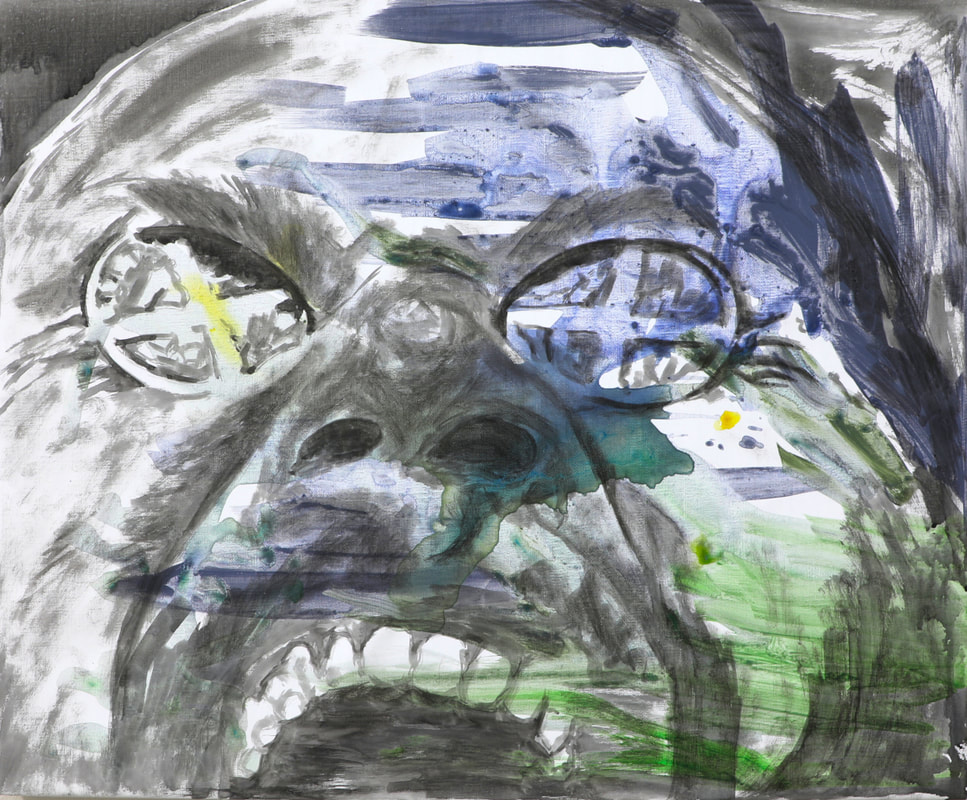
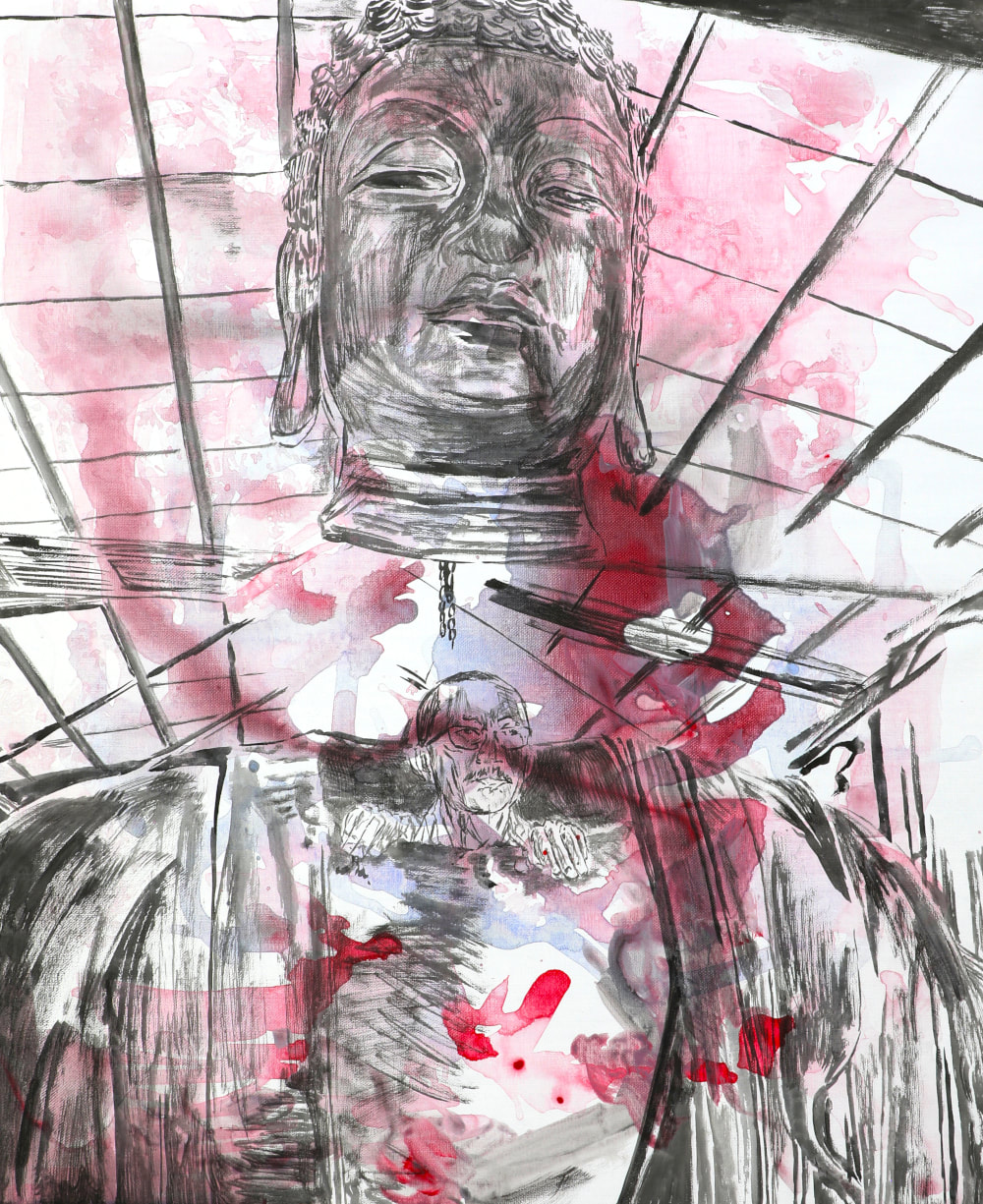
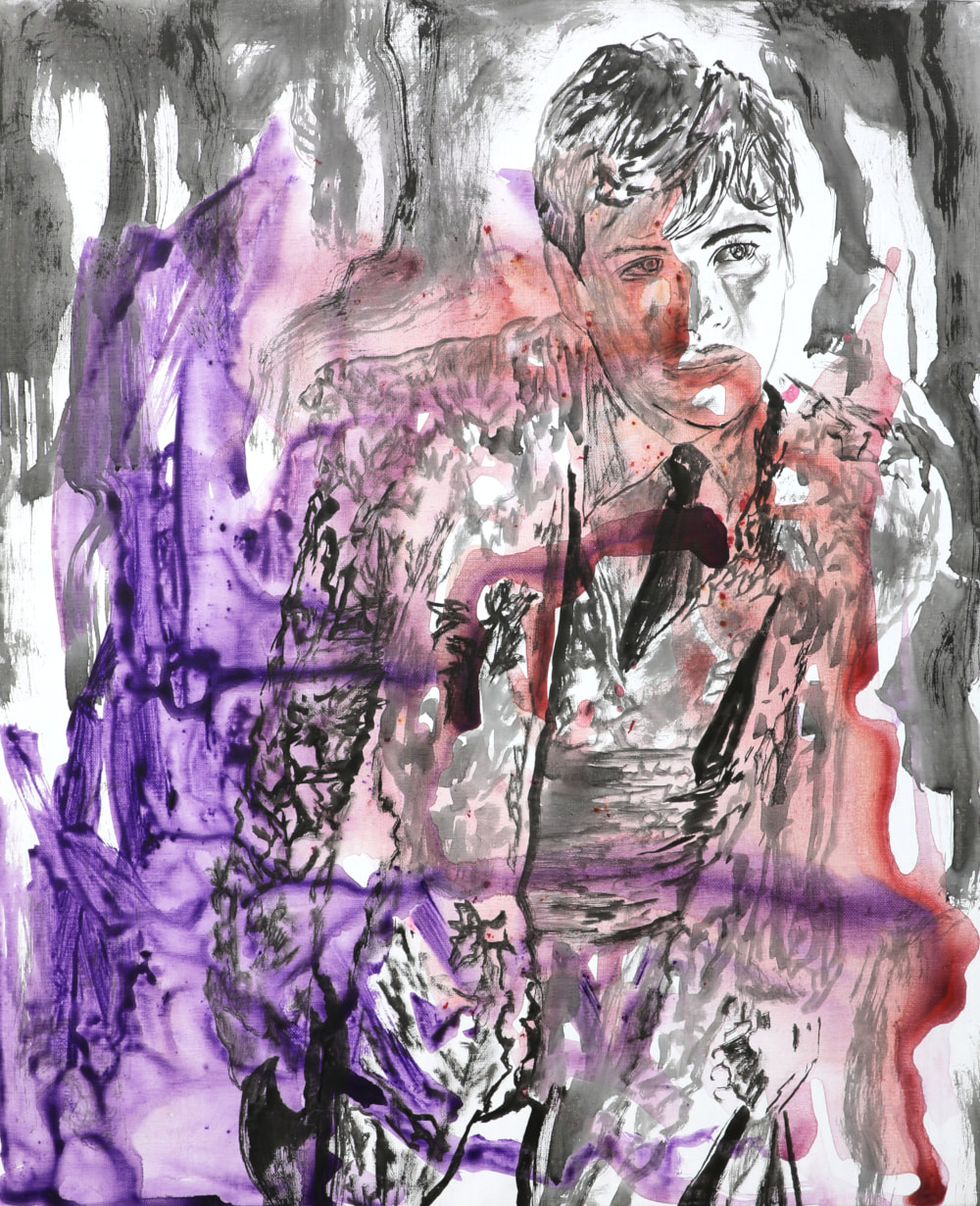
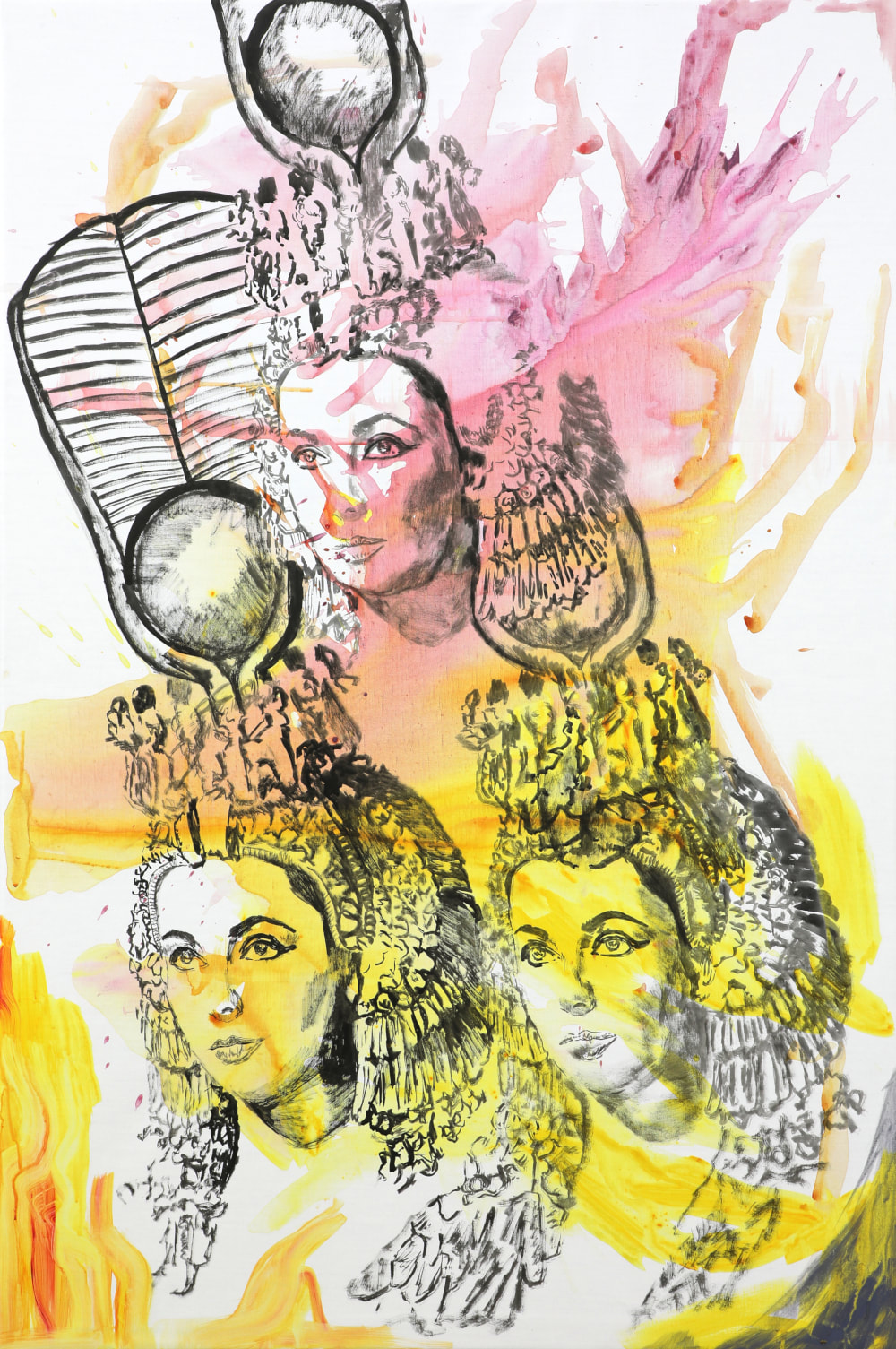
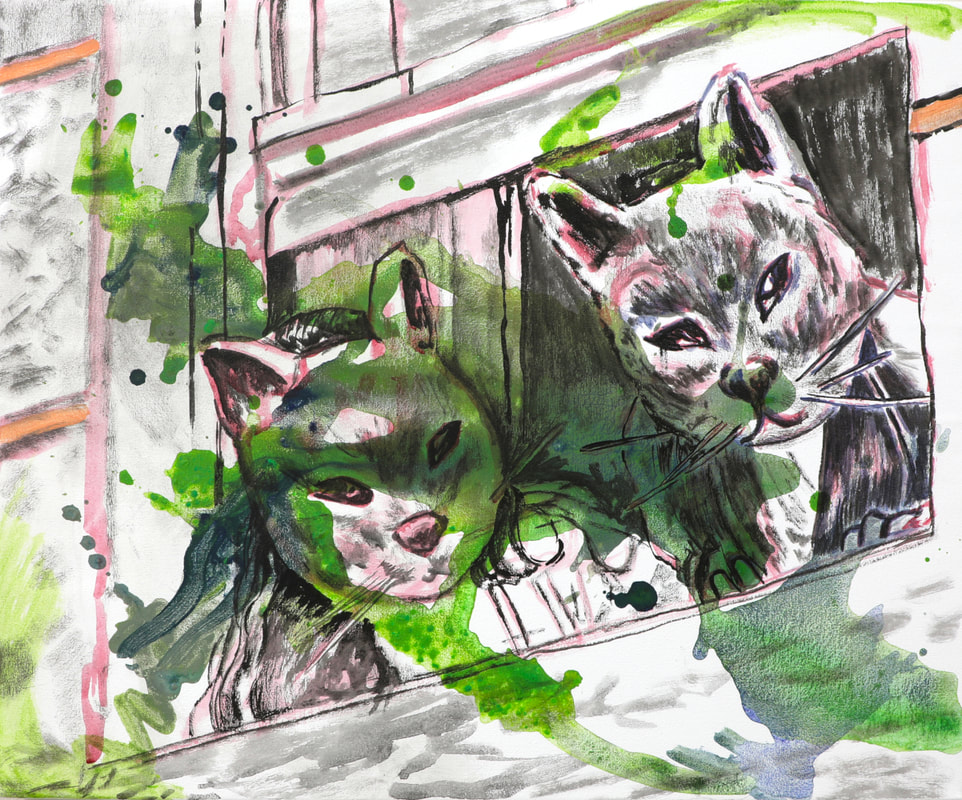
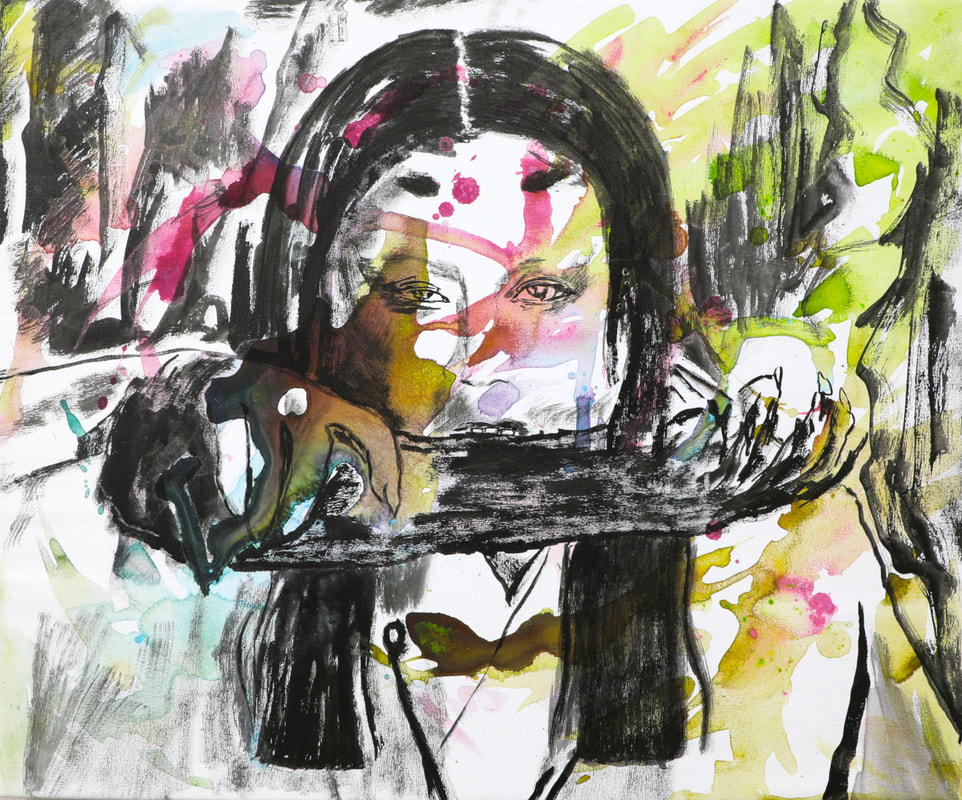
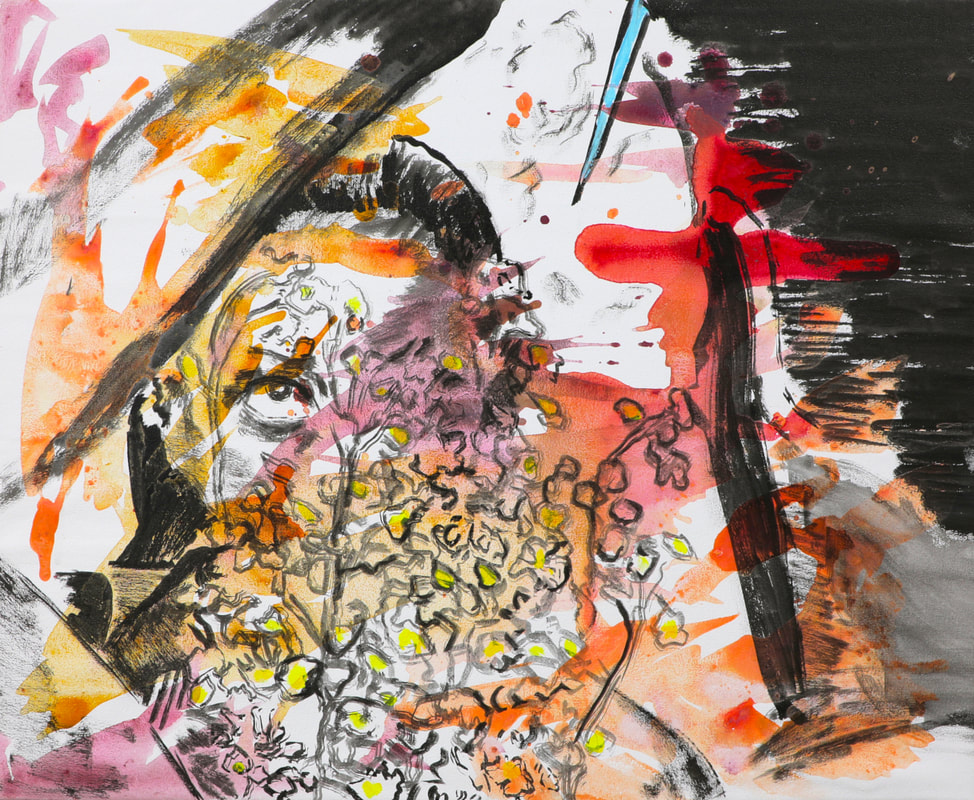
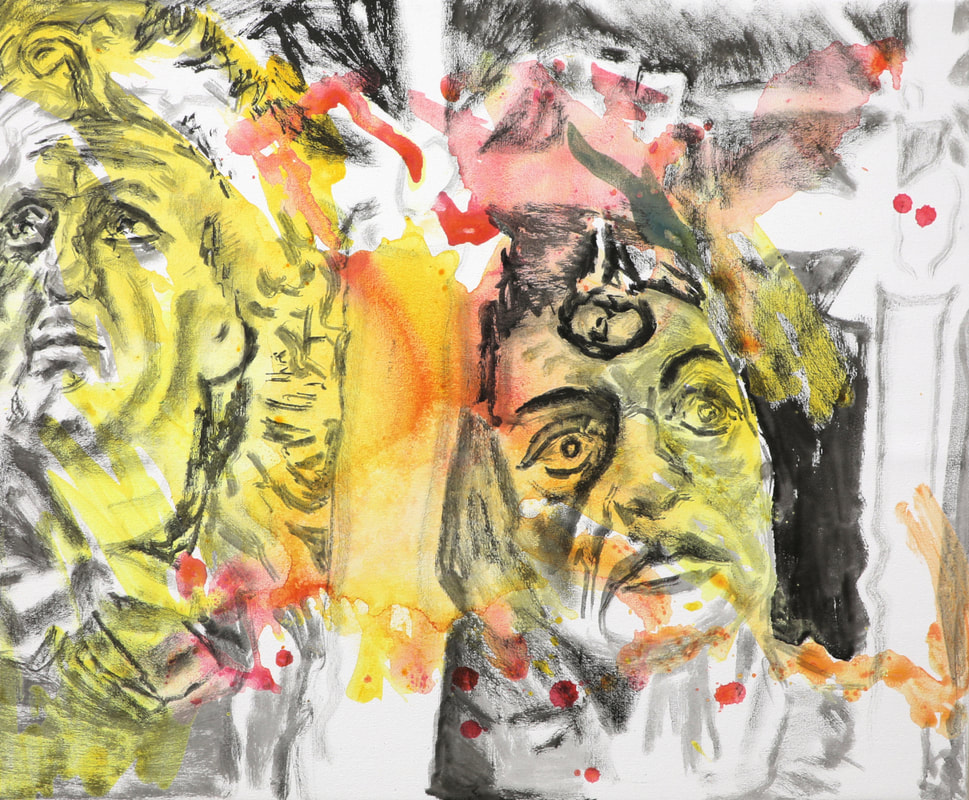
Chan’s images are arenas where figurative compositions – mostly based on film stills and executed in ink – can interact with non-narrative blots of colour. Sometimes the figures are teased out of random splashes of acrylic, sometimes they are superimposed with little concern for the movement of the paint as it dried on the canvas. And sometimes colour is inserted when the image is already in place.
These are unorthodox adaptations of traditional painting and colouring techniques. The ink brush dances over the clouds and rivulets of diluted paint, shaping the narrative that has driven Chan. In this exhibition he seeks to visualise, in equally unorthodox fashion, how religions are formed, how they crystallise from tales of monsters and devils, spirits and deities. As we build belief systems, do we focus on fear or on love? Do these systems help us connect to our higher selves or not?
The exhibition title, ‘Certain parties were not pleased’, is borrowed from the script of the film The Exorcist III (1990), in turn an adaptation of the novel Legion (1983) by William Peter Blatty, who also directed the film. The Exorcist III was not a critical success, but Chan always found Brad Dourif’s performance as the ‘Gemini Killer’ arresting and thought-provoking.
Who are the ‘certain parties’? It is a reference to organised religion as a source of influence and power over society. Chan’s focus is on spiritual searching and the individual path to love, whatever detours it might require. In cinema and other forms of popular culture, and in life around him, he has observed how discontent and disagreement become part of our struggle to find our true connection and focus. He wants to offer us a path, through these new works, to becoming more content, more agreeable.
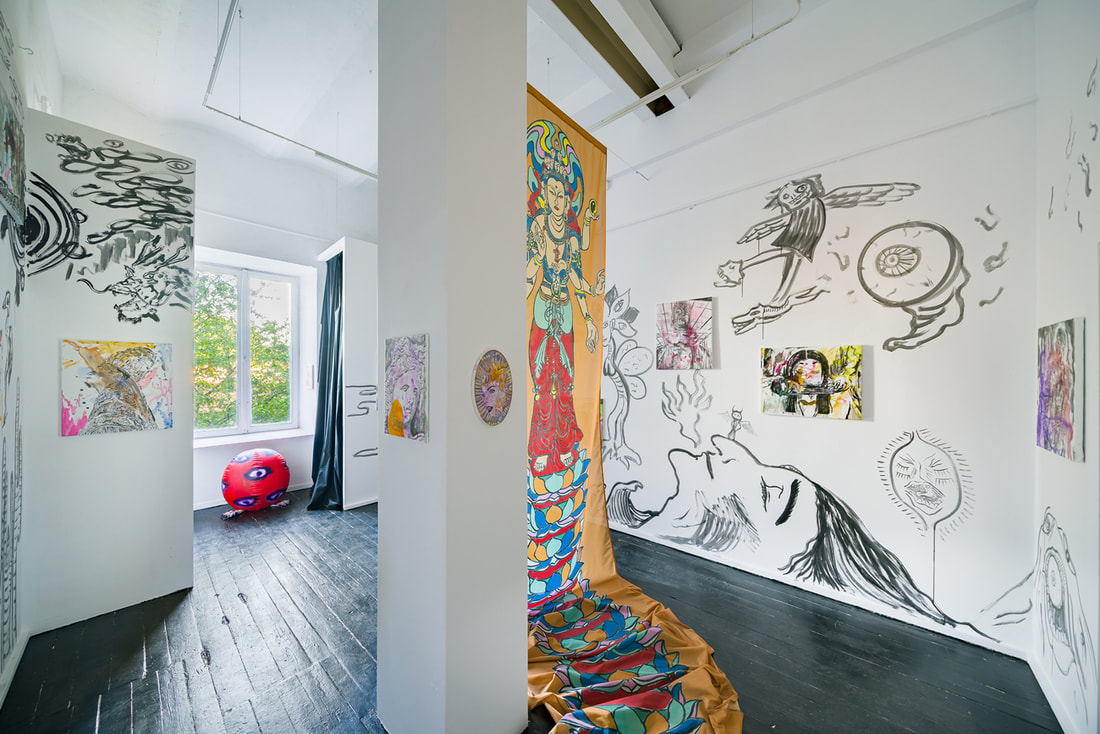
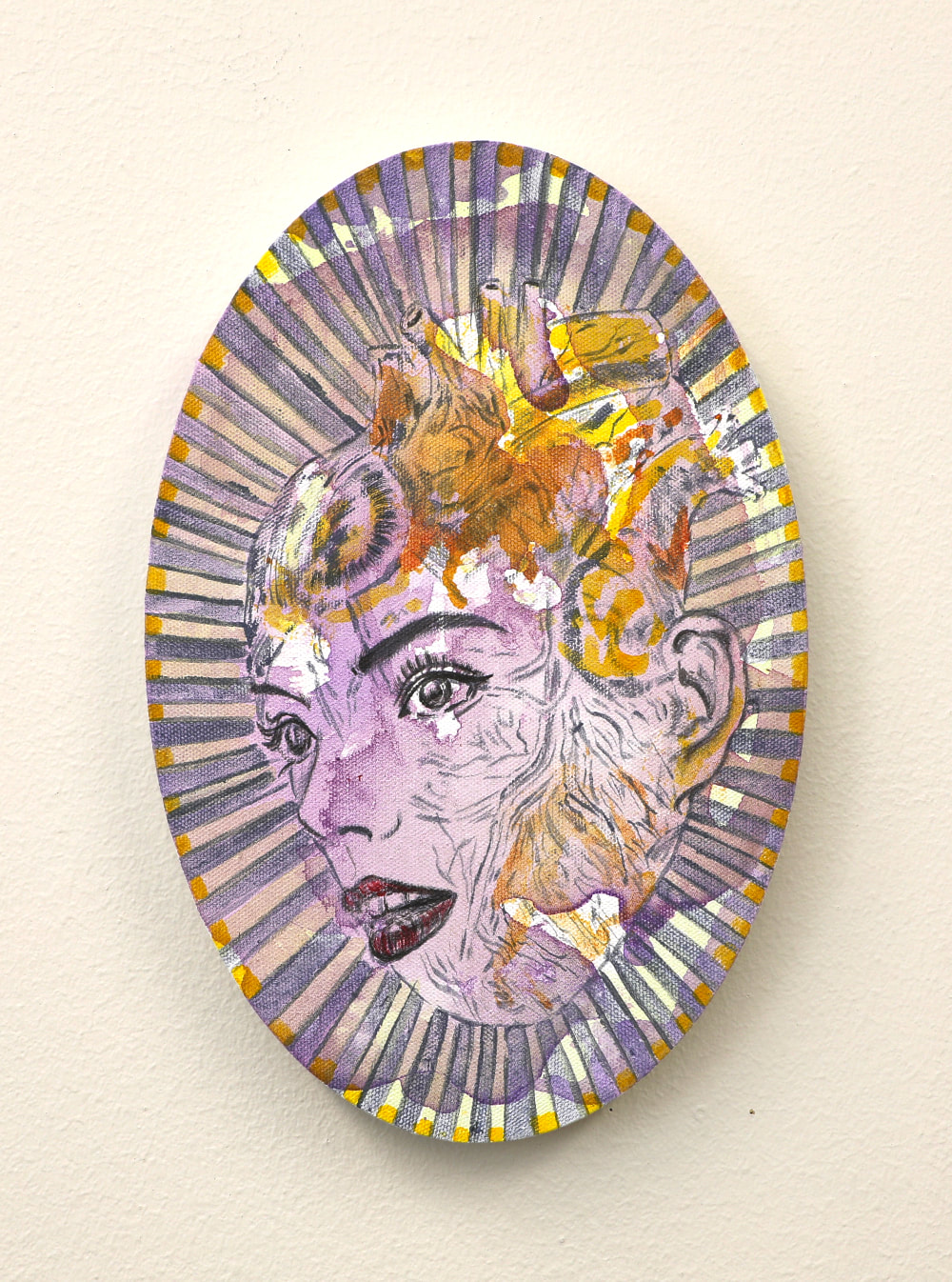
The exhibition is set up as a small temple, accommodating different beliefs and juxtaposing them to drives and obsessions. Chan wanted to set an example of an inclusive space, where all kinds of beings would be welcome to experience, demonstrate and declare love in their own ways: a highly spiritual being (Goddess of the Heart), a monk lost while searching for the meaning of love (Heart Sutra Protection), a gambler immersed in his own light and darkness (Two-Up), a cat spirit relying on its innate energy of revenge (I Told You I Will Come Back) or a group of priests lost in formality who have forgotten or even lost their actual connection with God (Critical Mass, based on a still from The Exorcist III).
The suspended print A Too Distant Grace shows Guanyin, the Chinese Goddess of mercy whose name means ‘observe the sound’. The narrow length of fabric is cut so long that it falls onto the floor in cascading folds. Is this abundance a meaningful expression of devotion or is it redundant? What do we gain, in spiritual terms, by exaggerating the outer manifestations of our beliefs?
These are just examples from the exhibition. How you interpret them, and Chan’s work as a whole, will depend on your understanding of belief and of love.
Oscar Chan Yik Long was born in Hong Kong in 1988 and lives in Helsinki. He holds a Bachelor of Fine Arts from the Academy of Visual Arts of Hong Kong Baptist University and has exhibited extensively in Hong Kong and internationally since 2011.
His most recent solo exhibition was ‘Don’t leave the dark alone’ at Gallery EXIT in Hong Kong in 2021, and among his significant participations in group exhibitions are ’Myth Makers: Spectrosynthesis III’ at Taikwun Contemporary Art Centre in Hong Kong in 2022 (curated by Chantal Wong and Inti Guerrero), ‘Carried by the Wind‘ at SalonMondial in Basel in 2022 (curated by Angelika Li), ‘First International Festival of Manuports’ at Kunsthalle Kohta in Helsinki in 2021 (curated by Anders Kreuger), ‘Futur, ancien, fugitif – une scène française’ at Palais de Tokyo in Paris in 2019, ‘Divided We Stand’, the Busan Biennale, South Korea, in 2018 (curated by Cristina Ricupero and Jörg Heiser) and ‘A Journal of the Plague Year’ at ParaSite in Hong Kong, Cube Project Pace in Taipei, Arko Art Centre in Seoul, South and Kadist Art Foundation in San Francisco in 2013–15 (curated by Cosmin Costinas and Inti Guerrero).
Chan published the artist’s zine Melted Stars with Bored Wolves in Cracow in 2022 and he is now preparing a more substantial book with the same publishing house.
Solo Exhibition
Cazul 101, Bucharest, Romania
2023
Press Release
20 April – 27 May 2023
In his first solo exhibition at Cazul 101 Oscar Chan Yik Long presents a series of new paintings in acrylic and Chinese ink on canvas together with some works in other techniques, all enveloped in a site-specific painting installation.
Chan’s images are arenas where figurative compositions – mostly based on film stills and executed in ink – can interact with non-narrative blots of colour. Sometimes the figures are teased out of random splashes of acrylic, sometimes they are superimposed with little concern for the movement of the paint as it dried on the canvas. And sometimes colour is inserted when the image is already in place.
These are unorthodox adaptations of traditional painting and colouring techniques. The ink brush dances over the clouds and rivulets of diluted paint, shaping the narrative that has driven Chan. In this exhibition he seeks to visualise, in equally unorthodox fashion, how religions are formed, how they crystallise from tales of monsters and devils, spirits and deities. As we build belief systems, do we focus on fear or on love? Do these systems help us connect to our higher selves or not?
The exhibition title, ‘Certain parties were not pleased’, is borrowed from the script of the film The Exorcist III (1990), in turn an adaptation of the novel Legion (1983) by William Peter Blatty, who also directed the film. The Exorcist III was not a critical success, but Chan always found Brad Dourif’s performance as the ‘Gemini Killer’ arresting and thought-provoking.
Who are the ‘certain parties’? It is a reference to organised religion as a source of influence and power over society. Chan’s focus is on spiritual searching and the individual path to love, whatever detours it might require. In cinema and other forms of popular culture, and in life around him, he has observed how discontent and disagreement become part of our struggle to find our true connection and focus. He wants to offer us a path, through these new works, to becoming more content, more agreeable.
The exhibition is set up as a small temple, accommodating different beliefs and juxtaposing them to drives and obsessions. Chan wanted to set an example of an inclusive space, where all kinds of beings would be welcome to experience, demonstrate and declare love in their own ways: a highly spiritual being (Goddess of the Heart), a monk lost while searching for the meaning of love (Heart Sutra Protection), a gambler immersed in his own light and darkness (Two-Up), a cat spirit relying on its innate energy of revenge (I Told You I Will Come Back) or a group of priests lost in formality who have forgotten or even lost their actual connection with God (Critical Mass, based on a still from The Exorcist III).
The suspended print A Too Distant Grace shows Guanyin, the Chinese Goddess of mercy whose name means ‘observe the sound’. The narrow length of fabric is cut so long that it falls onto the floor in cascading folds. Is this abundance a meaningful expression of devotion or is it redundant? What do we gain, in spiritual terms, by exaggerating the outer manifestations of our beliefs?
These are just examples from the exhibition. How you interpret them, and Chan’s work as a whole, will depend on your understanding of belief and of love.
Oscar Chan Yik Long was born in Hong Kong in 1988 and lives in Helsinki. He holds a Bachelor of Fine Arts from the Academy of Visual Arts of Hong Kong Baptist University and has exhibited extensively in Hong Kong and internationally since 2011.
His most recent solo exhibition was ‘Don’t leave the dark alone’ at Gallery EXIT in Hong Kong in 2021, and among his significant participations in group exhibitions are ’Myth Makers: Spectrosynthesis III’ at Taikwun Contemporary Art Centre in Hong Kong in 2022 (curated by Chantal Wong and Inti Guerrero), ‘Carried by the Wind‘ at SalonMondial in Basel in 2022 (curated by Angelika Li), ‘First International Festival of Manuports’ at Kunsthalle Kohta in Helsinki in 2021 (curated by Anders Kreuger), ‘Futur, ancien, fugitif – une scène française’ at Palais de Tokyo in Paris in 2019, ‘Divided We Stand’, the Busan Biennale, South Korea, in 2018 (curated by Cristina Ricupero and Jörg Heiser) and ‘A Journal of the Plague Year’ at ParaSite in Hong Kong, Cube Project Pace in Taipei, Arko Art Centre in Seoul, South and Kadist Art Foundation in San Francisco in 2013–15 (curated by Cosmin Costinas and Inti Guerrero).
Chan published the artist’s zine Melted Stars with Bored Wolves in Cracow in 2022 and he is now preparing a more substantial book with the same publishing house.